Peptide Purity Guide 98%, 99% & Research-grade Explained Prg

A single common chromatographic approach is typically inadequate for peptides that are hydrophobic, extremely fundamental, closely related in turn, or partly detoxified. We offer HPLC and UPLC purity evaluation workflows that focus on valuable separation as opposed to only generating a percent. We design logical workflows around the sample type, series functions, modification account, and choice context. Jobs might entail unrefined intermediates, cleansed peptides, saved whole lots, client-supplied materials, or products created through our personalized peptide synthesis platform.
Pollutant Troubleshooting
For scientists, acquiring validated peptides isn't just a formality-- it's the structure of reliable experiments and research reproducibility. Poor-quality peptides (those with undiscovered contaminations, wrong series, or weakened components) can result in misleading data and irreproducible results. In fact, healthy proteins and peptides are amongst the most widely made use of lab reagents, yet research studies have actually revealed that their quality is frequently inadequate, causing poor data reproducibility. Starting with correct lab recognition is consequently an essential part of a scientist's quality assurance operations.
Not every application needs 99% pureness, and purification is a significant part of peptide production cost. Trace quantities of solvents used throughout synthesis and purification-- acetonitrile, dimethylformamide (DMF), dichloromethane-- can stay in the end product. These are usually existing at really reduced levels in effectively made peptides and are governed by ICH Q3C guidelines for acceptable limitations. If the target peptide's top make up 99.1% of the complete optimal area, the peptide is reported as 99.1% pure by HPLC. Several respectable research study peptide suppliers make use of third-party labs; some conduct in-house screening with magazine of research laboratory qualifications.Substances
Peptide screening is the set of logical checks utilized to assess a peptide sample prior to it is utilized in a study operations. In practical COA testimonial, the term typically refers to purity screening, identity testing, and documentation review. Pureness screening asks how much of the detected sample is the major peptide versus related contaminations. Identification screening asks whether the gauged mass or sequence-related evidence matches the designated peptide. Documents review asks whether the record is batch-specific, traceable, and described sufficient to be investigated. Peptide testing is the analytical process made use of to confirm that a study peptide is both pure and properly identified.Finally, understanding peptide purity levels and qualities aids you make notified decisions for your experiments. A peptide's purity percent informs you just how much of that example is the actual deal versus by-products, with usual research qualities being around 95% up to 98-99% for additional purity. Analytical HPLC and MS are your buddies here-- HPLC measures pureness, and MS confirms identification, together guaranteeing you recognize what remains in your tube.
Mass Spectrometry (ms): Identification Confirmation
- Lots of peptide programs encounter analytical uncertainty prior to they stop working clinically.For a 30-residue peptide at the very same efficiency, that drops to roughly 86%.With high degrees of experience in carb chemistry and our comprehensive peptide analysis system, Imaginative Peptides can give top notch peptide pureness determination solutions.If you see numerous large optimals of comparable elevation, you're looking at either a low-purity example or a blend.Purity testing asks just how much of the discovered example is the primary peptide versus related impurities.
Reliable peptide screening laboratories will certainly provide a collection of modern logical techniques-- HPLC coupled with MS is a must, and availability of additional techniques like capillary electrophoresis or amino acid analysis is a benefit. Be cautious of labs that do not make use of mass spectrometry alongside HPLC, as this might miss essential identity information. Likewise, prevent laboratories that can not show validated logical methods. In line with ICH standards, confirmed approaches indicate the laboratory has established the examination's precision, precision, detection limitations, and so on, guaranteeing the data you obtain are trustworthy.
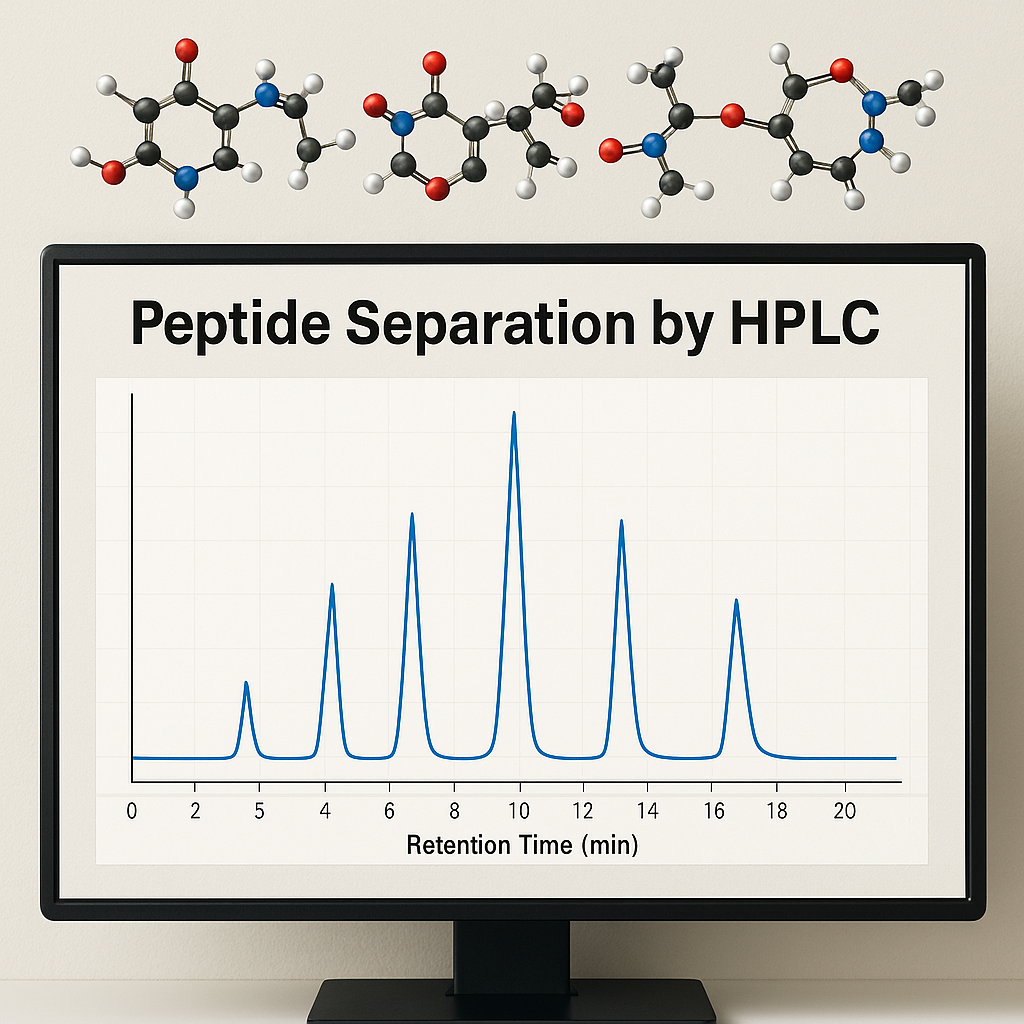
These are valuable in the appropriate setting, but they should be taken method-specific proof rather than an universal replacement for HPLC and MS. But peptide purity is perhaps the solitary essential high quality metric for any type of research study peptide. It directly affects the dependability and reproducibility of experimental outcomes. A peptide listed at 75% pureness and one at 99% purity aren't just various qualities-- they can create meaningfully different end results in the very same assay. Trusted labs use tried and tested testing methods to analyze peptide examples and confirm their purity and chemical structure. One core approach is High-Performance Fluid Chromatography (HPLC), the gold requirement for examining peptide pureness. HPLC separates peptide mixtures and can spot also minor contaminations below 1% of the example [4] A normal lab will certainly run the peptide with an HPLC system and produce a chromatogram-- the main top corresponds to the target peptide, and any additional peaks suggest various other substances. The pureness is after that measured as the percent of the major optimal area versus complete locations, providing a precise step of just how pure PharmaLabGlobal research chemicals the peptide is [2]